Decoding the Odds: Understanding Casino Game Probability
Every spin of a roulette wheel, flip of a card, or roll of the dice in a casino is governed by the laws of probability. For many players, the term “odds” is thrown around loosely, often misunderstood or even ignored. Yet, understanding the probabilities behind casino games is the key to making informed decisions, managing expectations, and even enjoying the experience more fully. In this comprehensive guide, we’ll break down what casino game probability really means, how it’s calculated, and why it should matter to every player—casual or seasoned.
The Foundation: What Is Casino Game Probability?
Probability is the mathematical study of random events, expressed as the likelihood that a certain outcome will occur. In the context of casino games, probability informs us of how likely it is to win, lose, or hit a particular result. Every game found in a casino—whether it’s a slot machine, a hand of blackjack, or a spin of the roulette wheel—operates on these mathematical principles.
For example, the classic six-sided die offers a simple illustration. Each face has an equal 1-in-6 chance (about 16.67%) of landing face up. However, casino games are rarely this straightforward. They often involve multiple probabilities, combinations, or even complex rules that affect the outcome.
.png)
A crucial fact: Casinos do not operate on luck alone. Their profitability is rooted in precise mathematical strategies, often referred to as the “house edge,” which ensures that the odds are always slightly in their favor over time.
House Edge vs. Payout Odds: What’s the Difference?
Two concepts frequently encountered by players are “house edge” and “payout odds.” While often conflated, they represent different sides of the same coin.
House edge is the built-in advantage the casino has on a given game, expressed as a percentage. For example, European roulette has a house edge of 2.7%, meaning that over a long period, the casino expects to keep about $2.70 for every $100 wagered.
Payout odds, on the other hand, describe how much a player stands to win relative to their bet. For instance, a single-number bet on roulette pays 35 to 1.
Understanding the difference is vital. The payout odds may look enticing, but if the true probability of winning is much lower than the payout odds suggest, the house edge remains in play.
Here’s a comparison of common casino games and their typical house edges:
| Casino Game | Typical House Edge (%) | True Probability of Top Win | Payout Odds |
|---|---|---|---|
| European Roulette | 2.7 | 2.7% (single number) | 35 to 1 |
| American Roulette | 5.26 | 2.63% (single number) | 35 to 1 |
| Blackjack (optimal play) | 0.5-1.5 | ~42% (player win) | 1 to 1 (win), 3 to 2 (blackjack) |
| Slot Machines | 2-15 | Varies (often less than 1%) | Varies (often 1,000+ to 1 on jackpots) |
| Craps (Pass Line) | 1.41 | 49.3% (win on Pass Line) | 1 to 1 |
This table highlights how the probability of winning and the payout odds are not always aligned, underscoring the importance of understanding both concepts.
Randomness and Fairness: How Casinos Ensure Unpredictability
Casinos, both physical and online, go to great lengths to ensure that game outcomes are unpredictable and fair. This unpredictability is a cornerstone of probability.
In land-based casinos, roulette wheels are regularly inspected, and decks are shuffled according to strict protocols. Dice are replaced frequently, and surveillance monitors for any irregular activity.
Online casinos use Random Number Generators (RNGs) to simulate randomness. An RNG is a complex algorithm that produces thousands of number sequences per second, ensuring that each spin or deal is entirely independent of previous outcomes. In 2023, over 80% of all online slot and table games were certified by independent testing agencies, such as eCOGRA or iTech Labs, to verify the integrity of their RNGs.
It’s important to note that, in fair casinos, there is no pattern or “hot streak” that can be predicted or exploited. The probability of a specific outcome remains constant, regardless of past results—a phenomenon known as the “gambler’s fallacy.”
Probability in Action: Examples from Popular Casino Games
Let’s take a closer look at how probability shapes the experience—and the odds—in several popular casino games.
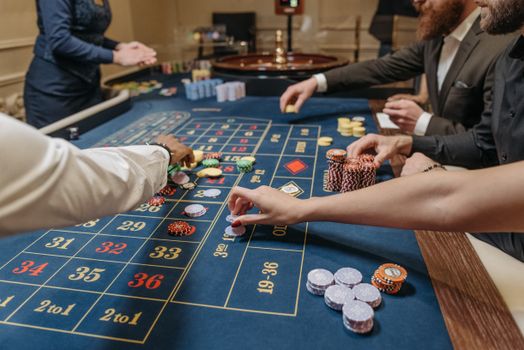
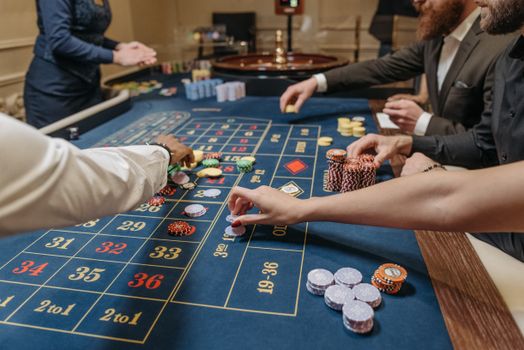
Roulette: In European roulette, there are 37 pockets (numbers 1-36 plus a single zero). The probability of landing on any one number is 1 in 37, or about 2.7%. Bets on red or black cover 18 pockets, giving a 48.6% chance of winning, but the zero tilts the odds ever so slightly in favor of the house.
Blackjack: This game combines elements of skill and probability. The chance of being dealt a natural blackjack (an Ace plus a 10-value card) in a single hand is about 4.8%. However, your overall odds of winning a hand are influenced by the number of decks in play and the specific rules of the table.
Craps: On the come-out roll, the probability of rolling a 7 or 11 (winning for the Pass Line bet) is 22.2%, while rolling a 2, 3, or 12 (losing instantly) is 11.1%. The remaining rolls establish a “point,” with subsequent probabilities that can be calculated for each scenario.
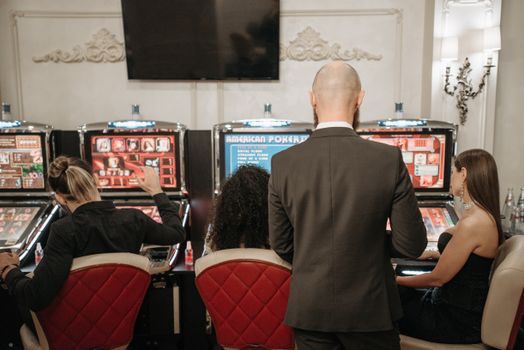
Slot Machines: Unlike table games, slot machines use weighted reels and RNGs, making the actual probability of hitting the jackpot a closely guarded secret. However, studies have shown that the odds of hitting a top jackpot on a typical slot are often between 1 in 5,000 and 1 in 30 million, depending on the machine.
Volatility and Risk: Beyond Simple Probability
Another critical concept related to casino game probability is volatility, sometimes called variance. Volatility measures how much and how often outcomes deviate from the average result.
Low-volatility games, like baccarat or even-money bets in roulette, offer frequent, smaller wins and losses. High-volatility games, such as slots with massive jackpots, feature infrequent but potentially huge payouts.
Understanding volatility helps players choose games that align with their risk tolerance. For example, a player seeking steady entertainment with minimal risk might gravitate toward blackjack or baccarat. Conversely, someone chasing a life-changing jackpot might prefer high-volatility slot machines, accepting the longer odds for a shot at a big win.
A 2022 industry report showed that 57% of online casino players preferred low- to medium-volatility games, while 19% sought high-volatility experiences. This reflects the human desire for both excitement and predictability.
Why Understanding Probability Matters for Casino Players
Casino gaming is ultimately a form of entertainment, but it’s easy to get swept up in the excitement and lose sight of the underlying mathematical reality. Recognizing the role of probability empowers players to make smarter choices.
For example, knowing that the house edge in American roulette is almost double that of European roulette (5.26% vs. 2.7%) can guide players to games with better odds. Understanding that each spin of a slot machine is independent—and not “due” for a win—can prevent costly misconceptions.
In 2021, a survey by the UK Gambling Commission revealed that only 34% of casino players could accurately define "house edge," indicating a widespread lack of understanding that can lead to unrealistic expectations and potentially risky play.
By decoding the odds, players can set realistic goals, manage their bankrolls more effectively, and ultimately have a more enjoyable experience—win or lose.
The Real Takeaway: Embracing the Role of Chance
At their core, casino games are a blend of chance, probability, and, in some cases, skill. While the odds are always in the house’s favor, understanding probability does not guarantee victory—but it does offer the next best thing: clarity. Appreciating how the numbers work behind the scenes transforms the casino floor from a realm of pure luck to an arena of informed possibility.
Whether you’re rolling dice, spinning reels, or playing your hand at blackjack, knowing the odds won’t change the outcome of any single game, but it can change how you play—and how you feel about the results.