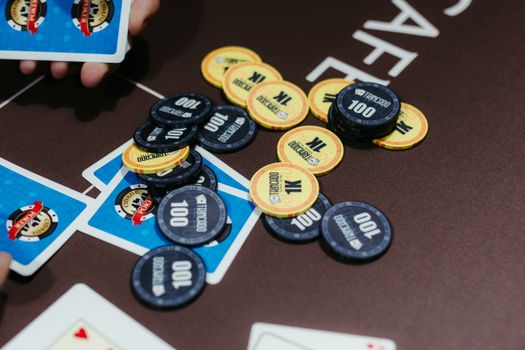
Poker’s global popularity is no accident—the game combines strategy, psychology, and chance in a way that has fascinated players for centuries. But as with any game that achieves legendary status, countless myths and misconceptions have developed around poker. Some of these myths are harmless fun, but others can mislead new players and cause them to make costly mistakes. Before you buy your first deck of cards or log into an online poker room, it’s essential to separate fact from fiction. Let’s dive deep into the biggest myths about poker and uncover the truths that every beginner should know.
Understanding the Nature of Poker: More Than Just Luck
One of the most persistent myths about poker is that it’s a game of pure luck. While chance certainly plays a role in the short term, skill becomes the defining factor over the long term. Multiple studies, including a 2012 analysis published in the journal PLOS ONE, have shown that experienced players consistently outperform novices, especially over thousands of hands.
Poker is not like roulette or slot machines, where every outcome is independent and determined entirely by random events. Instead, poker involves strategy, psychology, and probability. For example, the World Series of Poker Main Event, which attracts thousands of entrants annually, has seen repeat champions like Johnny Chan, Doyle Brunson, and Phil Hellmuth—a statistical improbability if luck were the only factor.
.png)
In fact, a 2009 study conducted by Cigital analyzed over 100 million online poker hands and found that more than 75% of them never made it to a showdown, meaning the winner was determined by betting strategy rather than the cards themselves. This statistic alone shows how skillful play can influence results far beyond mere chance.
Myth vs. Reality: Comparing Common Poker Beliefs
To further clarify what’s fact and what’s fiction in the world of poker, let’s look at a comparison of some of the most common beliefs and what the reality actually is.
| Myth | Reality |
|---|---|
| Poker is all about luck | Skill, strategy, and psychology play a major role over time |
| You need to bluff often to win | Well-timed bluffs are important, but most hands are won without bluffing |
| Online poker is rigged | Licensed platforms use Random Number Generators (RNGs) audited for fairness |
| The best hand always wins | Players can win with weaker hands through betting and reading opponents |
| Only pros can make money at poker | Skilled amateurs can profit with the right mindset and bankroll management |
Understanding the reality behind these myths can save new players from making bad decisions at the table.
The Bluffing Myth: Is Poker Just About Deception?
Thanks to movies and TV shows, many people believe that poker is all about bluffing—the art of convincing your opponents that you have a better (or worse) hand than you actually do. However, the truth is more nuanced.
Statistically, most poker hands are won without bluffing. According to data from major online poker sites, successful players bluff in only about 10-15% of hands. The majority of pots are won by betting with strong hands or by taking advantage of opponents’ mistakes.
Bluffing is an important skill, but overusing it is a common beginner’s error. Experienced players know when to bluff and, more importantly, when not to. For example, bluffing in a multi-way pot (with several players still in the hand) is much riskier than in a heads-up situation.
The key takeaway: while bluffing is a tool in your poker arsenal, relying on it too heavily will almost certainly lead to losses. Focus instead on learning solid fundamentals—such as hand selection, position, and pot odds.
Online Poker Rigging: Separating Fact from Fiction
Another widespread myth is that online poker games are rigged to favor certain players or hands. It’s easy to see why this myth persists—players remember bad beats and unlucky streaks more vividly than their wins.
The reality, however, is that reputable online poker sites are tightly regulated. Most operate under licenses from respected jurisdictions like Malta, Gibraltar, or the UK Gambling Commission. These sites use Random Number Generators (RNGs) that shuffle and deal cards in a manner indistinguishable from true randomness, and are regularly audited by independent firms such as eCOGRA.
In fact, a 2017 audit by eCOGRA of several leading poker sites found no statistical evidence of unfair dealing or manipulation—over tens of millions of hands, card distributions matched expected probabilities. If you’re playing at a well-known, licensed site, your results are determined by the same factors as live games: your decisions, your opponents’ skills, and, yes, a bit of luck.
That said, there are rogue sites operating without oversight. Always research a poker site’s license and audit history before depositing money.
Hand Strength Misconceptions: Why the Best Hand Doesn’t Always Win
Many new players assume that the strongest hand wins every time. However, poker is as much about what you do with your cards as the cards themselves. Experienced players can and do win with weaker hands, especially if they can read their opponents well.
For example, suppose you have a modest pair of sixes while your opponent holds a pair of nines. In a showdown, you’d lose. But if you recognize that your opponent is playing cautiously, you might represent a stronger hand and force them to fold. This is known as "playing the player," and it’s at the heart of advanced poker strategy.
Statistically, a 2011 MIT study found that in professional-level No-Limit Hold’em games, the player with the best actual hand won the pot only about 55% of the time. The remaining 45% of hands were won by betting—the other players folded before a showdown.
This dynamic means you don’t need to wait for premium hands to play profitably. Learning to read situations and opponents is just as valuable as understanding the odds of your cards.
Bankroll Building: Do You Need to Be a Pro to Profit?
A final myth that holds many back: “Only professional players can make money at poker.” The truth is that while it’s difficult to become a millionaire from poker, many amateurs, with the right approach, enjoy steady profits as a side hobby.
A 2022 report from PokerStars revealed that around 15% of regular online players are consistently profitable over a full year of play. These players aren’t all pros—they’re disciplined, study the game, and practice good bankroll management. For example, they avoid playing at stakes too high for their budget and take time to review their mistakes.
Key factors that help amateurs succeed include: - Playing at appropriate stakes for skill level and bankroll size - Studying strategy resources (videos, books, forums) - Tracking results with online tools or apps - Avoiding tilt (emotional decision-making after losses)It’s also worth noting that the vast majority of players—about 70% according to the same PokerStars report—play for entertainment, not profit. That’s perfectly okay. But if your goal is to win consistently, you don’t need to be a pro—just patient, disciplined, and willing to learn.
Final Thoughts: The Truth About Poker Myths
Poker’s mystique is built on a blend of reality and legend. While the game’s rich history is filled with tales of heroic bluffs and dramatic turnarounds, the facts tell a more practical story. Skill, discipline, and solid decision-making are much more important than luck or bravado in the long run.
By debunking these common myths, you can start your poker journey with realistic expectations and a stronger foundation. Remember: don’t fall for Hollywood stereotypes. Instead, focus on learning the strategies, understanding the odds, and enjoying the game for both its challenges and its fun. The real excitement of poker comes not from chasing myths, but from mastering the fascinating truths of this timeless game.