The Psychology of Betting: Why People Believe in Systems and Strategies in Online Casinos
Online casinos are booming, drawing millions of players with their promise of excitement, risk, and—perhaps most powerfully—the hope of winning big. But behind the dazzling graphics, catchy music, and rapid-fire games lies a fascinating psychological landscape. One of the most intriguing aspects is the widespread belief in betting systems and strategies. Why do so many people trust in these systems, despite the known odds? What psychological forces compel players to search for patterns in games of chance? In this article, we'll dive into the psychology of betting and uncover why people are drawn to systems and strategies in online casinos.
The Allure of Control: Illusion in Games of Chance
Most online casino games, from roulette to slots, are based on random number generators (RNGs) or chance. Yet, studies show that a significant percentage of players—up to 70% in some surveys—believe that their actions can influence the outcome. This is rooted in what's known as the illusion of control: the belief that one can exert influence over outcomes that are, in reality, determined by luck alone.
Psychologist Ellen Langer first described the illusion of control in the 1970s. She found that people often overestimate their ability to control events, especially in gambling settings. For example, players rolling dice harder for higher numbers or softer for low numbers, even though the outcome is entirely random. Online, this illusion persists as players choose when to click “spin” or “deal,” believing their timing or choice of game can tip the odds in their favor.
.png)
Online casinos often reinforce this illusion through design. Features such as “near-miss” outcomes, customizable bets, and interactive interfaces create a sense that skill or strategy is involved. In reality, the house edge remains constant, but the player’s sense of agency is deeply powerful.
Pattern Recognition and the Human Brain: Seeing Order in Chaos
The human brain is wired to seek patterns. This evolutionary trait helped our ancestors survive by recognizing changes in the environment. In gambling, however, this strength becomes a liability.
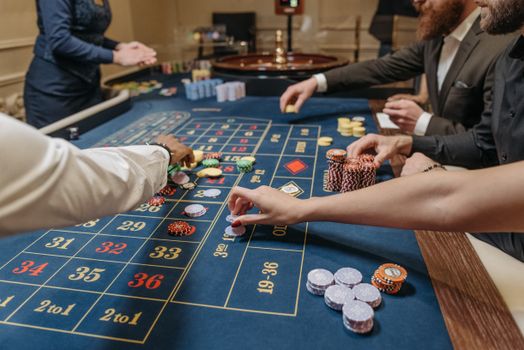
Consider roulette: after a sequence of reds, many players believe black is “due” to come up next, a phenomenon known as the gambler’s fallacy. This is despite each spin being independent, with a probability of just under 48.6% for red or black in European roulette (accounting for the green zero). Slot players often track spins, believing a machine is “hot” or “cold,” even though modern slots use RNGs that reset the odds every spin.
A 2019 study published in the Journal of Gambling Studies found that over 60% of online gamblers believed in “lucky streaks” or “due wins.” This reflects the brain’s relentless drive to find order in randomness—even when none exists. The belief in patterns invites players to search for systems that can “crack” the game, fueling the popularity of betting strategies.
Popular Betting Systems: Why They Persist
Despite mathematical proofs that no betting system can overcome the house edge in the long run, systems like the Martingale, Fibonacci, and Labouchère have long captivated gamblers. Why?
First, betting systems offer structure. For many, gambling without a plan feels reckless, while a system provides a sense of discipline and control. Second, these systems often create short-term wins, especially in games with even-money bets like roulette or blackjack.
Let’s compare some of the most famous betting systems:
| Betting System | How It Works | Popular Game | Key Risk |
|---|---|---|---|
| Martingale | Double your bet after each loss until you win | Roulette (even bets) | Can lead to large losses and table limits stop recovery |
| Fibonacci | Increase bets following the Fibonacci sequence after losses | Baccarat, blackjack | Losses still escalate quickly, doesn’t change odds |
| Labouchère | Cross out numbers from a sequence after wins, add after losses | Roulette, blackjack | Can become complex and risky with long losing streaks |
| Paroli | Double bets after wins, reset after three wins or a loss | Roulette, baccarat | Relies on streaks; losses can quickly wipe out gains |
While these systems can appear to create winning streaks, mathematical analysis shows that the house edge is unaffected. Still, the psychological comfort and structure they provide ensures their ongoing popularity.
Cognitive Biases: Why We Overestimate Systems
Multiple cognitive biases fuel the belief in betting systems. Here are some of the most influential:
- $1 Players remember wins that “prove” their system works, while dismissing losses as bad luck. - $1 Dramatic wins are more memorable than steady losses, skewing perception. - $1 After investing time and money in a system, players are reluctant to quit, hoping to recoup losses. - $1 The belief that personal choices and strategies can influence purely random outcomes.A 2022 survey by the UK Gambling Commission found that 46% of online gamblers believed skill could improve their chances in games of chance—a clear sign of control bias. In the digital casino world, where information and advice about systems is plentiful, these biases are constantly reinforced through forums, videos, and “success stories.”
The Social Factor: Community, Competition, and Shared Belief
Online gambling is not just a solitary pastime. Many players participate in forums, watch live streams, or join social media groups dedicated to sharing strategies and stories. This sense of community amplifies belief in betting systems.
Social proof—the psychological phenomenon where people copy the actions of others—plays a major role. Seeing others talk about wins or endorse a system creates credibility, regardless of the underlying mathematics. Live dealer games, chat features, and leaderboards further enhance the sense of shared experience and competition.
A 2021 study by Gambling Research Exchange Ontario reported that online gambling forums discussing betting systems had over 1.2 million monthly visits worldwide. These communities foster a “wisdom of crowds” effect, where collective belief in a system can outweigh skepticism, making it easier for individuals to stick with their chosen strategy.
Emotional Drivers: Hope, Excitement, and the Thrill of the Chase
At its core, the belief in systems and strategies is about more than numbers—it's deeply emotional. Gambling activates the brain’s reward centers, releasing dopamine and creating feelings of excitement and anticipation. The possibility of outsmarting the system, even against the odds, is a powerful motivator.
Hope is an especially potent driver. For many, betting systems represent an achievable way to win back losses or hit a big jackpot. The ups and downs of following a system can be thrilling, providing a rollercoaster of emotions even if the final outcome is a loss. In fact, a 2020 survey by the American Gaming Association found that 64% of online gamblers cited “the excitement of the chase” as their primary motivation, above even the desire to win money.
Final Thoughts: Understanding the Belief in Betting Systems
The enduring belief in betting systems and strategies in online casinos is a testament to the complex interplay of psychology, emotion, and social influence. While the mathematical reality is clear—no system can overcome the house edge in the long run—the human mind is not always ruled by logic.
From the illusion of control to the search for patterns, from cognitive biases to the power of community and hope, players are drawn to systems that promise structure and agency in a world of chance. Understanding these psychological forces can not only help individuals make more informed choices about their gambling but also shed light on the broader appeal of online casinos.
Whether you’re a casual player or a frequent gambler, awareness of these underlying factors is key to enjoying the experience responsibly—and recognizing when belief in systems may be leading you astray.